
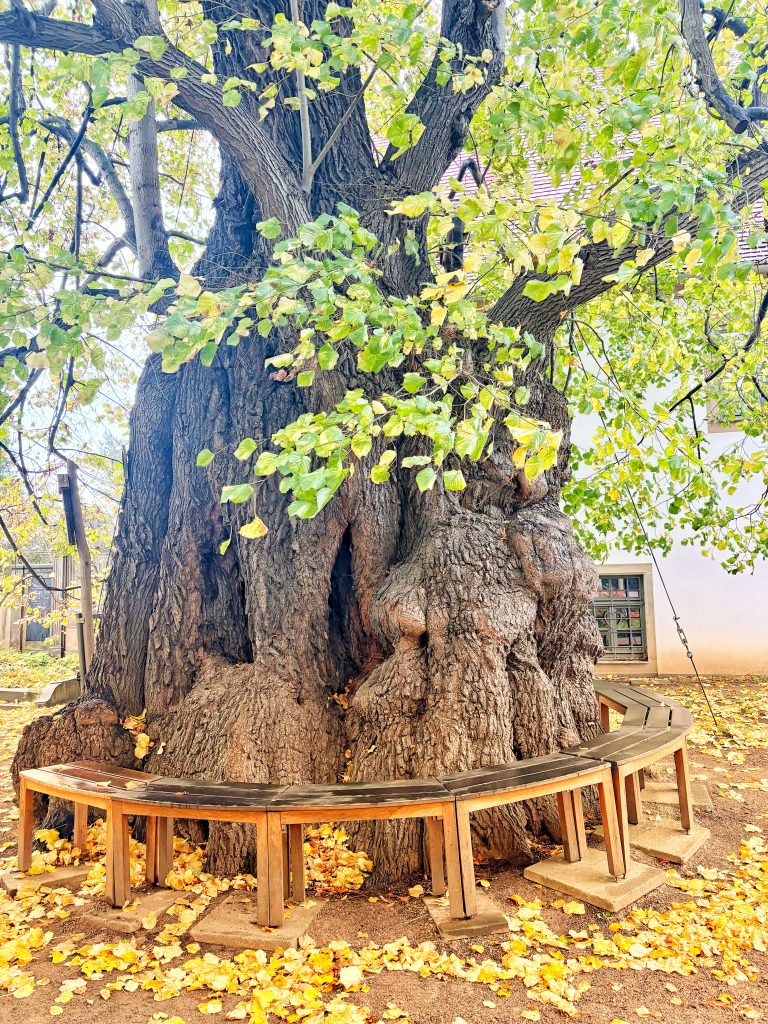
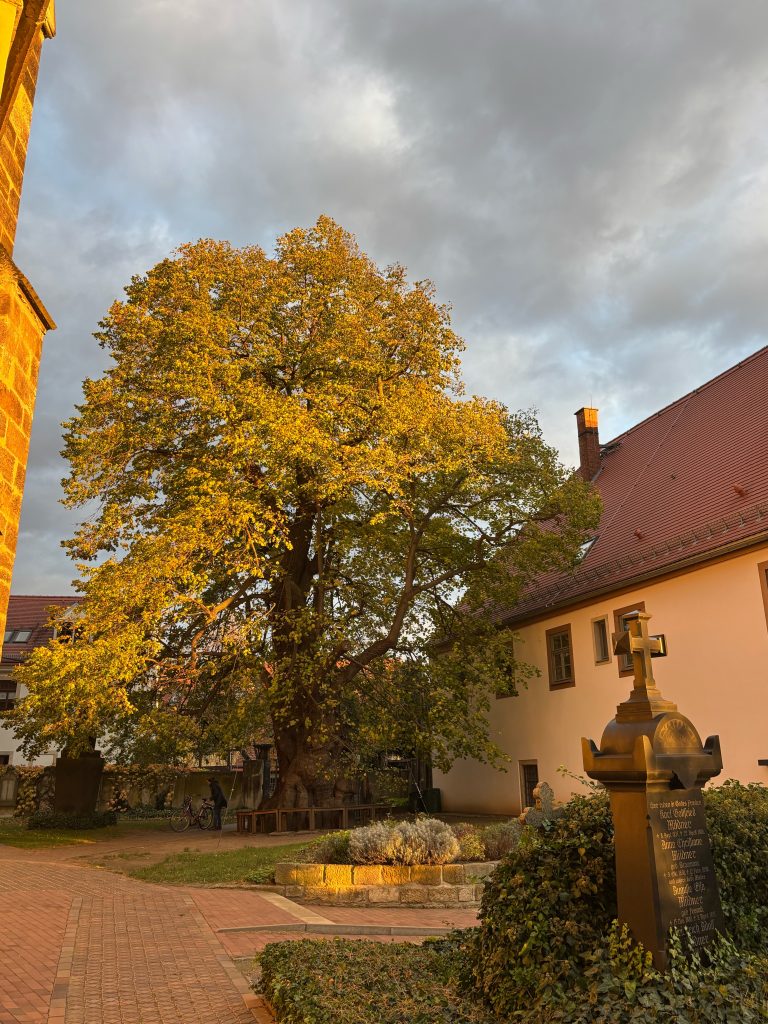
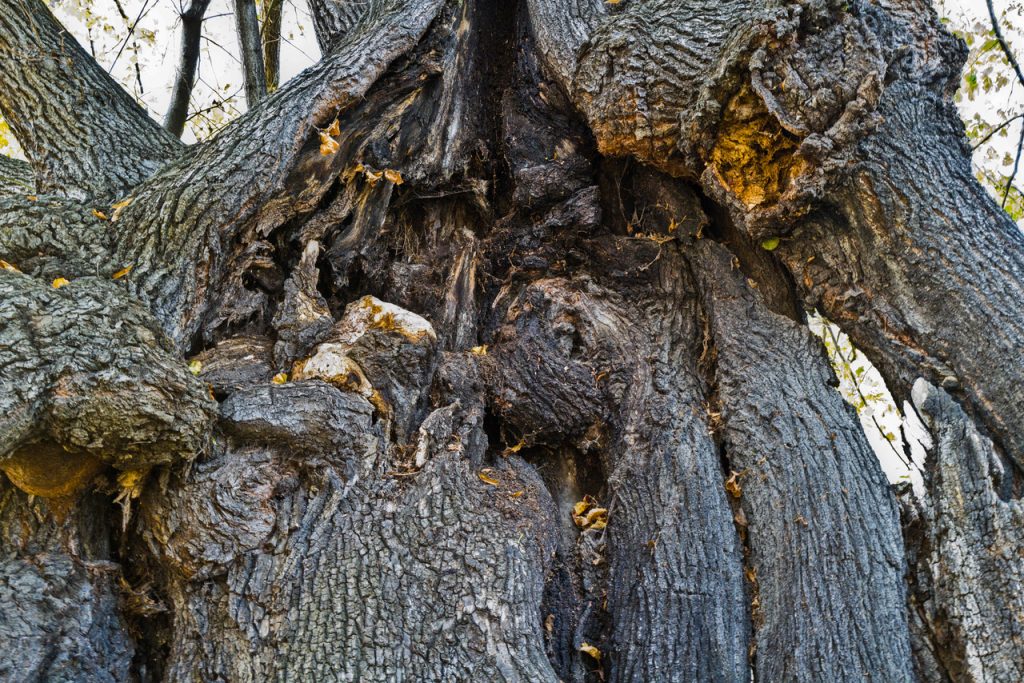
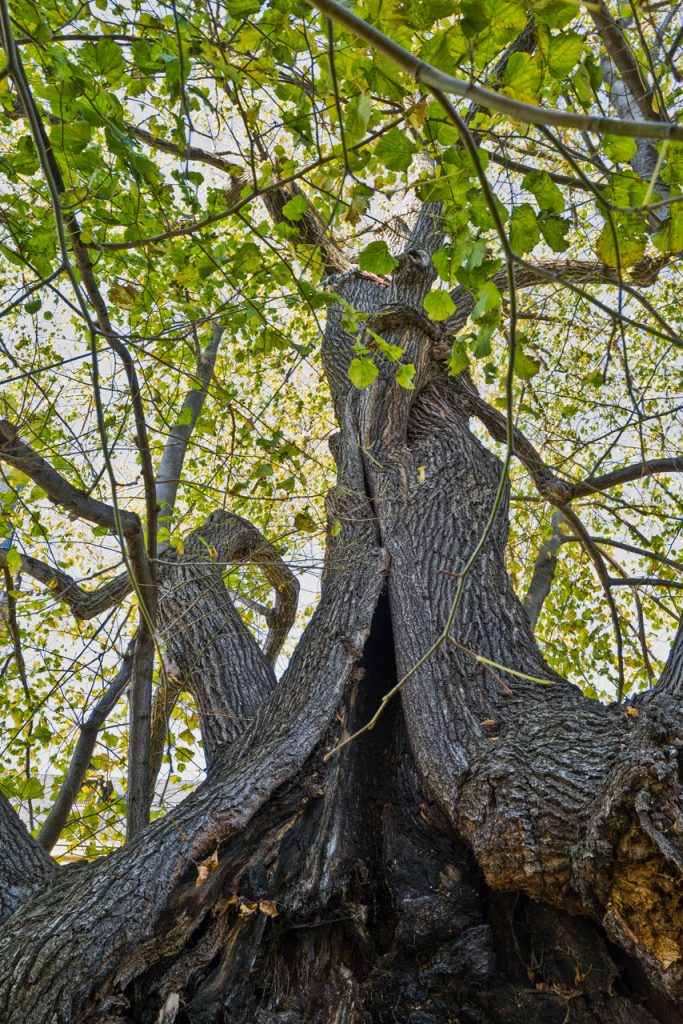
Like many of the trees on the Treeline journey, the Kaditzer Linde has had a long, eventful history. Situated in Kaditz, part of Dresden, it survived a huge fire in the 19th century when half of its trunk was completely burnt out, leaving a large cavity, big enough for children to play music in. But since then it has developed new roots, forming secondary trunks, increasing its stability and strengthening it. The tree is at least 600 years old and has an enormous girth now approaching 10 metres circumference.
It is situated in the churchyard of the Emmaus Church and during the Thirty Years' War, when the church itself was burnt out, Swedish troops camped under the lime tree. The interior of the church was redesigned during the mid-1700s and the ceiling fresco from the time shows the tree in its pre-burnt state.
Our concert at Kaditz, Dresden is on 22nd June, and it is fortuitous that the Elbe Cycle Route passes close by. I will be using to travel to perform there.
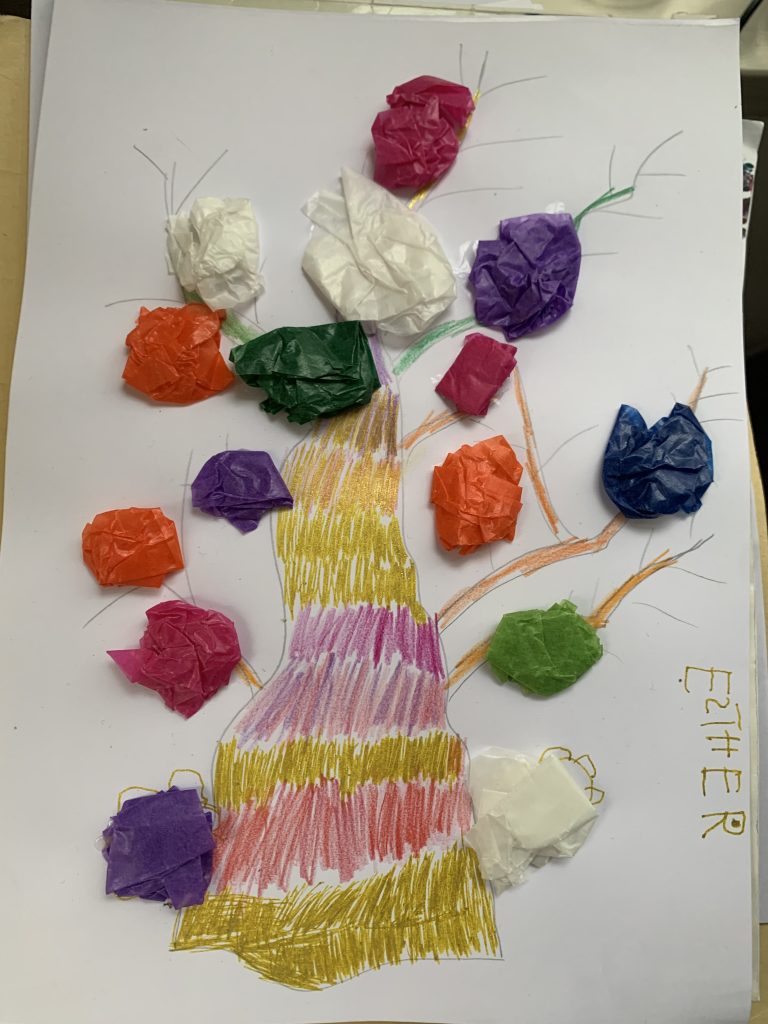
We are continuing the tradition of representing this amazing tree and below are contributions from Claudia Neuber, Roland Nagel, Katrin Kunde, Atiya Büst, Esther Preißler and Annegret Mühl.
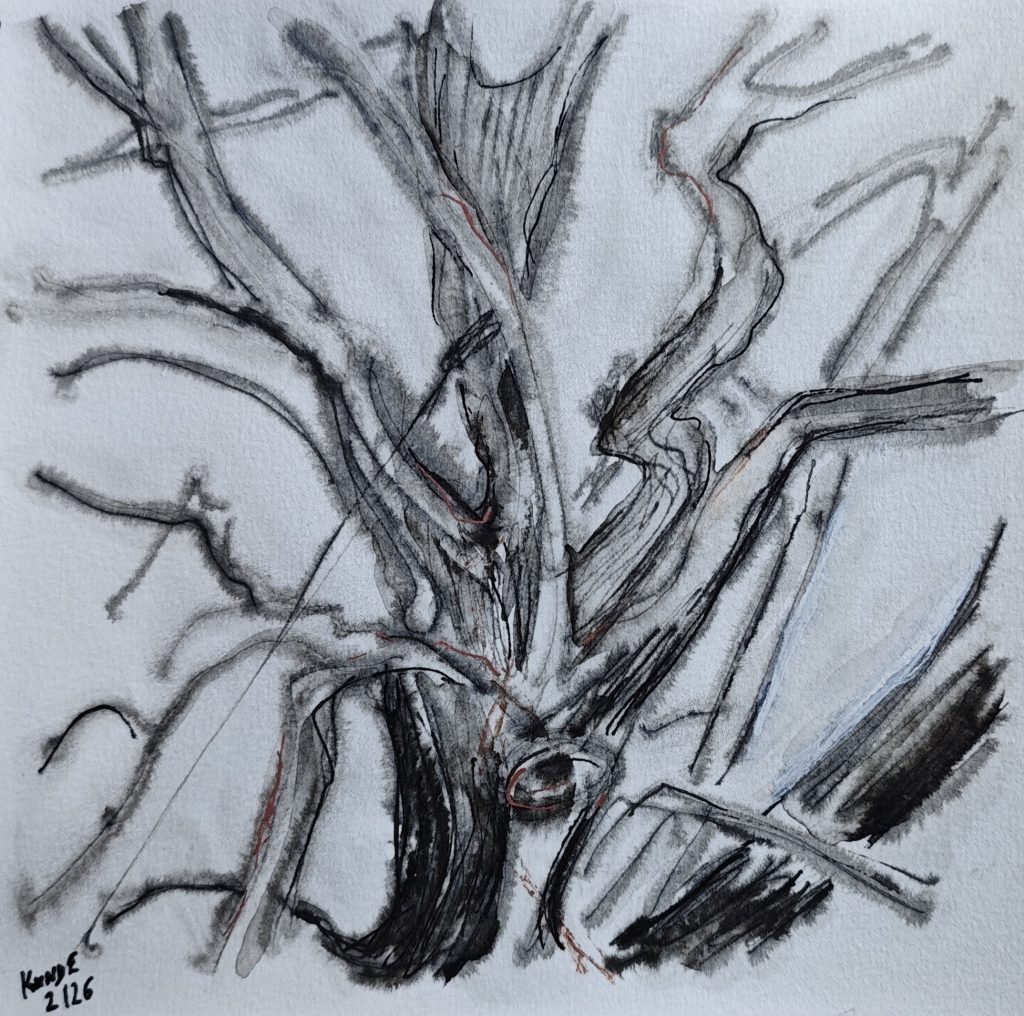
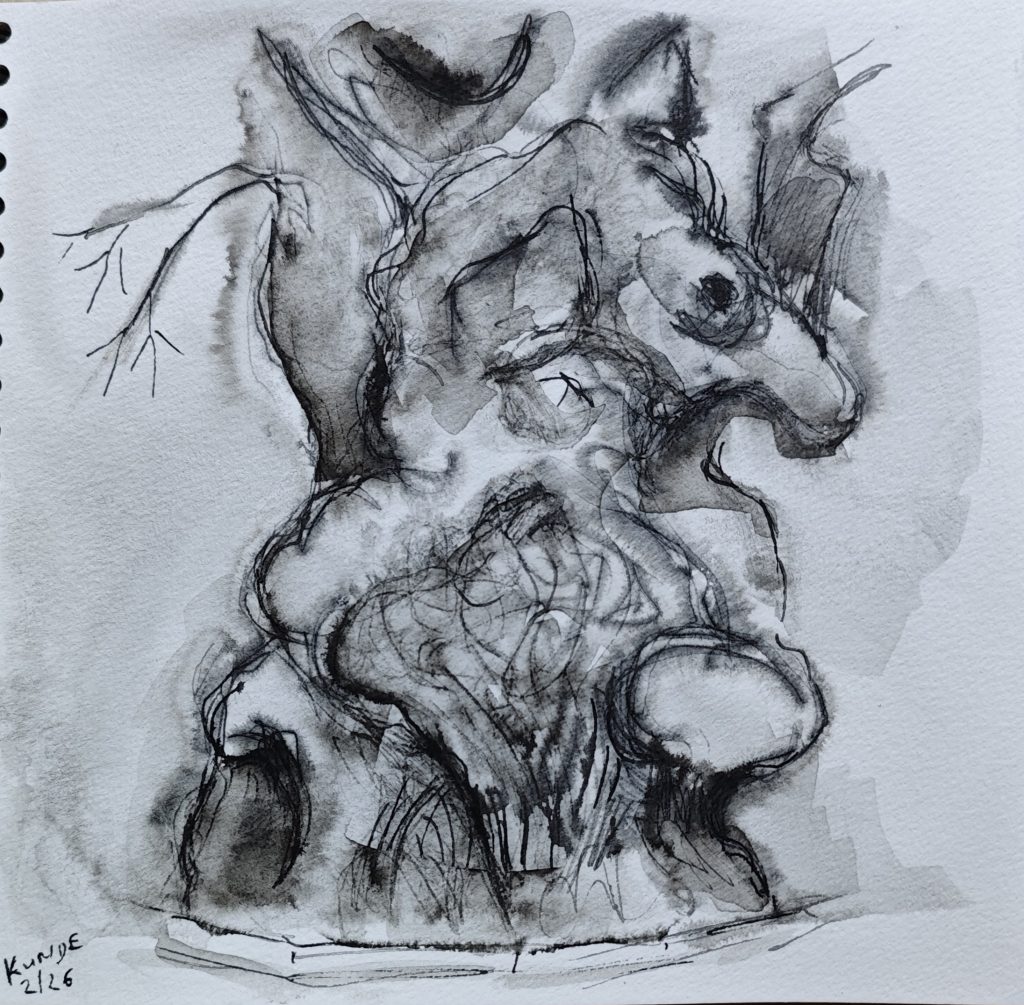
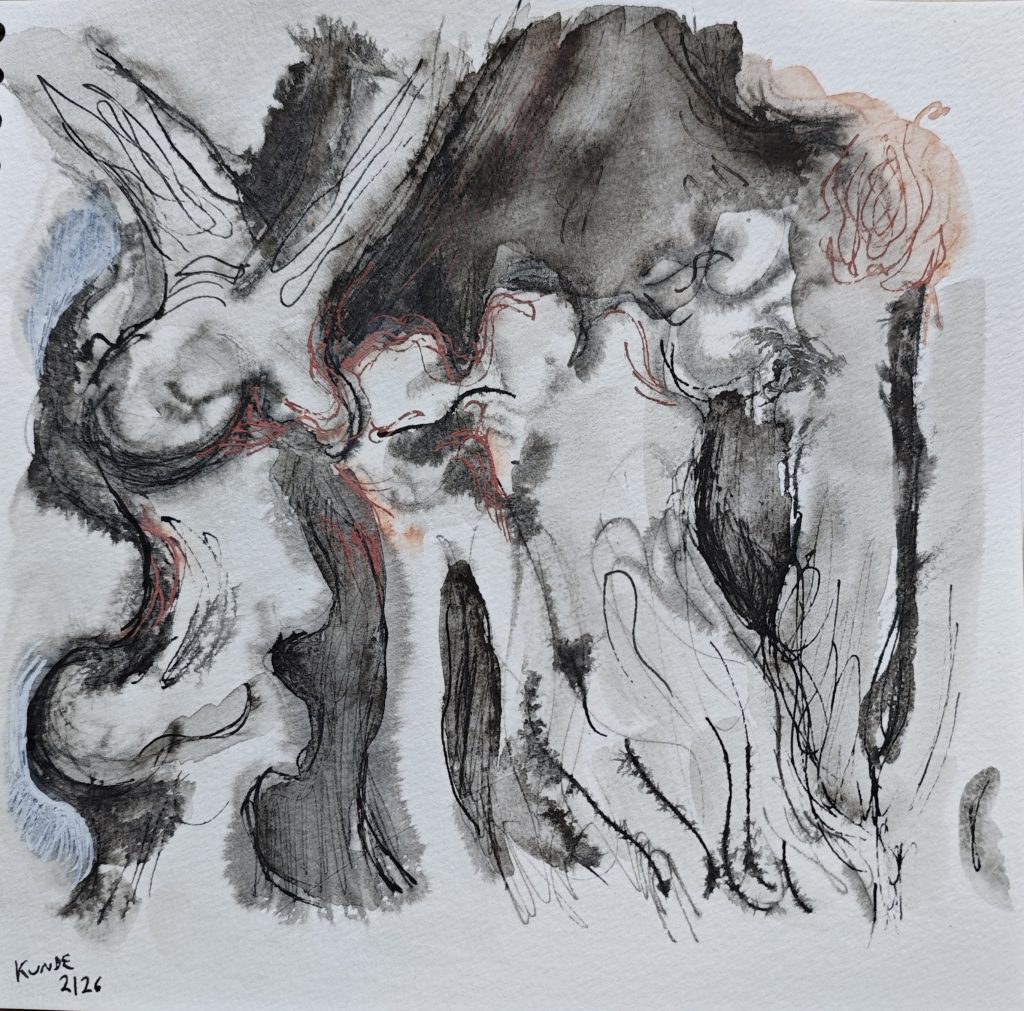
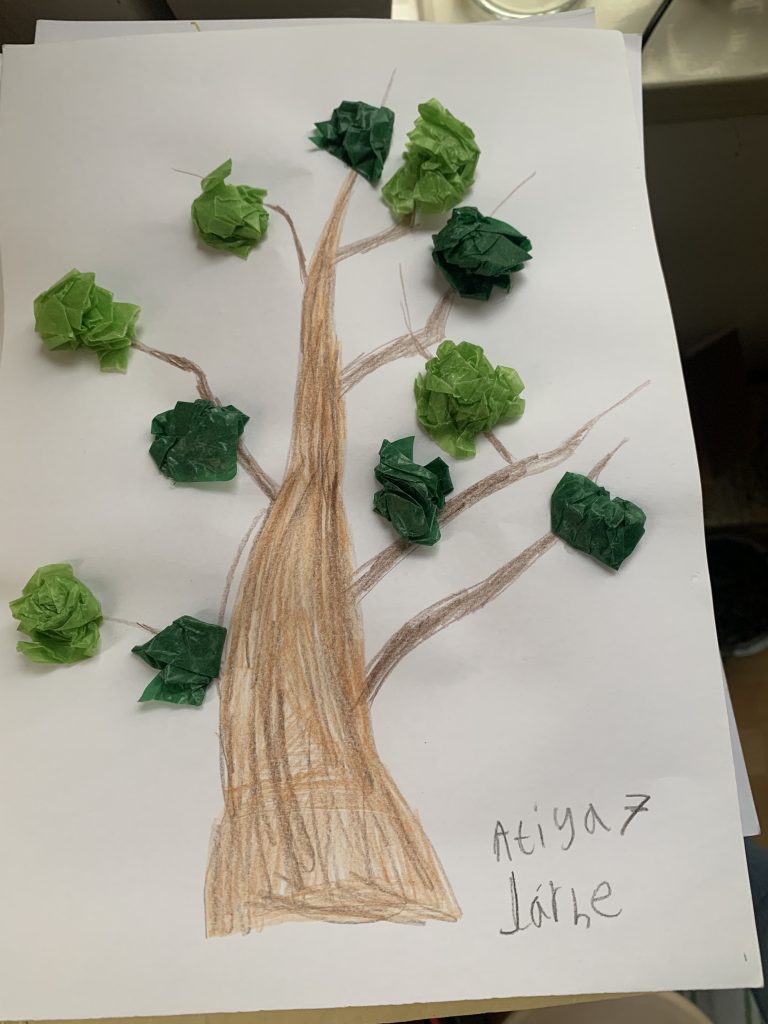
Lindegeflüster
Lindengrau ruht der Baum im Schnee
Explodiert in Grün, dass ich den Frühling seh.
grün im Sommer, Blatt um Blatt, lindensatt,
schamlos legt die Linde im Herbst die Kleider ab.
Die nackte Linde zeigt sich nach wie vor mit Stolz,
tolle Figur, starke Rinde, frostresistent ihr Holz.
Nur der Stamm sieht sagenhaft und eigen aus,
schaut da nicht das Gesicht eines Wichtels raus?
„Hallo?“, flüstere ich leise in den Stamm.
„Ist da wer drin? Ich bin`s, die Nachbarin!“
Und wirklich, etwas in der Linde spricht:
„Schon mal drüber nachgedacht,
was das Leben so zum Leben macht?“
„Schon oft, Herr Lindenwichtel“, flüstere ich zurück,
„was denken Sie denn, was ist Glück?“
Die Antwort säuselt: „Linde im Winde, das ist Glück,
Blätterrauschen, Mäusetaufen, high vom Duft in der Luft
hab ich Generationen kommen und gehen sehen.
Alle blieben irgendwann unter dieser Linde stehen.
Weil sie uns in einen Zusammenhang stellt,
der unsichtbar ist - aber hält.“
Annegret Mühl, 31.1.2026